
We found vacancies for you
View ad to continue
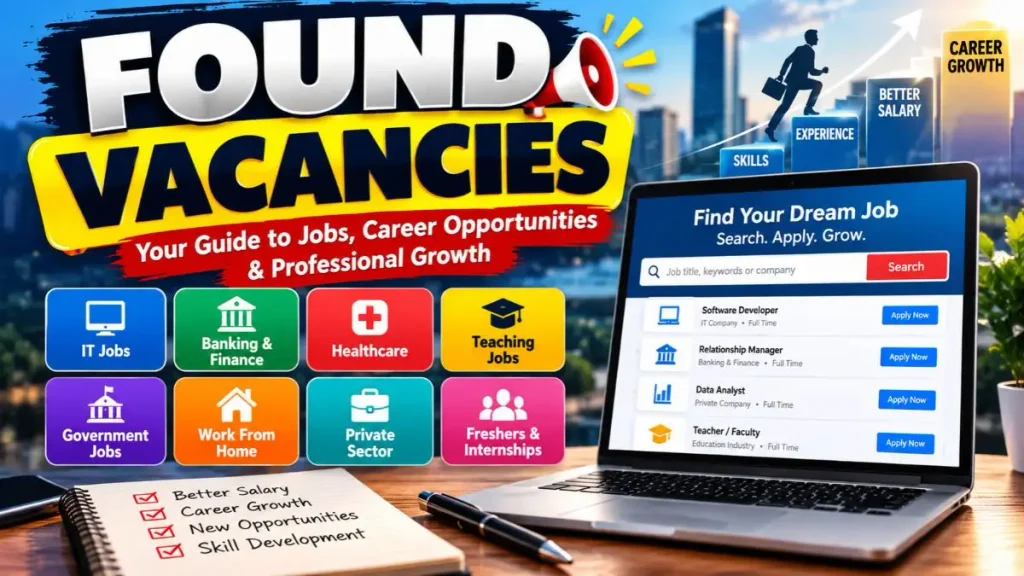
Found Vacancies: Your Guide to Jobs, Career Opportunities, Salary & Professional Growth
Finding the right job is no longer simply about searching for an opening and submitting a resume. Today, candidates need to understand the job market, compare career opportunities, evaluate salary packages, develop relevant skills, and make informed decisions about their professional future.
Found Vacancies is designed to make that process easier by bringing together useful information for job seekers, fresh graduates, experienced professionals, and candidates looking for better career opportunities.
Whether you are searching for a government job, private-sector vacancy, work-from-home opportunity, internship, fresher job, IT position, banking job, finance role, healthcare career, teaching position, or corporate employment opportunity, having the right information can significantly improve your job search.
Why Choosing the Right Job Matters
A job is more than a monthly salary. It can influence your professional development, financial stability, work-life balance, future career growth, and long-term goals.
Before applying for any position, candidates should consider several factors:
- Job responsibilities and daily duties
- Required educational qualifications
- Relevant skills and experience
- Salary and expected compensation
- Employee benefits and incentives
- Working hours and workplace location
- Career growth opportunities
- Training and professional development
- Company reputation and work environment
- Employment terms and conditions
A position that looks attractive because of its salary may not necessarily be the right fit if the responsibilities, location, working hours, or growth opportunities do not match your expectations.
Latest Job Vacancies and Employment Opportunities
The employment market continues to change as companies adopt new technologies, expand their operations, and create new professional roles.
Candidates can find opportunities across multiple sectors, including:
Information Technology
The technology sector continues to offer opportunities for software developers, web developers, data analysts, cybersecurity professionals, cloud specialists, technical support executives, and other technology-related roles.
Candidates with practical technical skills, certifications, and relevant project experience can improve their chances of finding suitable employment.
Banking and Finance
Banking and financial services offer career opportunities in areas such as customer service, financial operations, accounting, relationship management, credit analysis, investment services, and back-office operations.
Candidates interested in finance careers should pay attention to educational qualifications, professional certifications, communication skills, and industry-specific knowledge.
Healthcare
Hospitals, clinics, pharmaceutical companies, laboratories, and healthcare organizations require professionals across medical, administrative, technical, and support functions.
Depending on the position, candidates may need specific educational qualifications, professional licenses, or specialized training.
Education and Teaching
Schools, colleges, coaching institutes, online education companies, and training organizations regularly recruit teachers, tutors, academic coordinators, counselors, and administrative professionals.
Candidates should carefully review eligibility criteria and required certifications before applying.
Government Jobs
Government employment remains an important career option for many candidates because of structured recruitment processes, defined eligibility requirements, career progression, and various employee benefits.
Government recruitment may include opportunities in central government departments, state government organizations, public-sector institutions, railways, banking, defense, education, and other public services.
Candidates should always verify recruitment notifications, eligibility requirements, application deadlines, examination details, and official instructions from the relevant authority before submitting an application.
How to Find the Right Job Vacancy
A successful job search requires more than applying to every vacancy available.
Start by identifying the type of position you want. Consider your education, professional experience, skills, preferred industry, expected salary, and location.
Then create a focused search strategy.
For example, instead of searching for only “jobs,” a candidate could look for:
Software Developer Jobs for Freshers
Banking Jobs with Salary Details
Work From Home Jobs
Government Recruitment Opportunities
Remote Customer Support Jobs
Data Analyst Career Opportunities
Specific searches make it easier to find positions that match your professional profile.
Check Eligibility Before Applying
One of the most common mistakes job seekers make is applying without reading the eligibility requirements.
Before completing an application, check:
- Educational qualification
- Required degree or certification
- Age requirements, where applicable
- Work experience
- Technical or professional skills
- Language requirements
- Location requirements
- Application fee, if applicable
- Important dates
- Required documents
Understanding these requirements beforehand can save time and reduce the possibility of submitting an unsuitable application.
Salary and Compensation: What Should Candidates Look For?
Salary is an important part of any employment decision, but candidates should look beyond the headline figure.
A compensation package may include:
- Basic salary
- Performance incentives
- Annual bonus
- Employer-provided benefits
- Insurance benefits
- Retirement or provident fund contributions
- Paid leave
- Travel or other allowances
- Professional training
- Other employee benefits
When comparing two employment opportunities, candidates should consider the overall compensation package rather than focusing only on monthly take-home pay.
For experienced professionals, it can also be useful to evaluate whether the position provides meaningful career advancement and opportunities to increase earning potential over time.
Skills That Can Improve Your Career Prospects
Employers increasingly look for candidates who can combine educational qualifications with practical skills.
Depending on the industry, valuable skills may include:
- Communication
- Problem solving
- Data analysis
- Digital literacy
- Project management
- Financial knowledge
- Customer service
- Sales and negotiation
- Programming
- Cybersecurity
- Digital marketing
- Artificial intelligence
- Cloud computing
- Leadership
Candidates should regularly evaluate their skill set and identify areas where additional training or certification could improve their employment prospects.
Why Professional Certifications Can Matter
A relevant professional certification can help demonstrate specialized knowledge, particularly when candidates are competing for positions that require technical or industry-specific expertise.
However, certification alone does not guarantee employment. Employers may also consider practical experience, projects, communication abilities, education, interview performance, and problem-solving skills.
The best approach is to choose certifications that are relevant to the career path you actually want to pursue.
Resume Tips for Better Job Applications
Your resume is often the first professional document an employer sees.
A strong resume should be:
- Clear and easy to read
- Relevant to the position
- Professionally formatted
- Free from spelling and grammatical errors
- Focused on measurable achievements
- Updated with recent skills and experience
Instead of simply writing that you “worked on projects,” explain what you accomplished.
For example:
Weak:
Worked on digital marketing campaigns.
Better:
Managed digital marketing campaigns and analyzed performance data to improve lead generation and audience engagement.
Specific achievements give recruiters a better understanding of your capabilities.
Prepare Carefully for Job Interviews
Getting shortlisted is only one part of the recruitment process. The interview is an opportunity for employers to evaluate your communication, knowledge, experience, confidence, and suitability for the role.
Before an interview:
- Research the organization.
- Understand the job description.
- Review your resume.
- Prepare examples of your previous work.
- Practice common interview questions.
- Prepare questions for the interviewer.
- Check the interview format and location.
- Keep your professional documents ready.
For online interviews, test your internet connection, microphone, camera, and meeting software before the scheduled time.
Beware of Fake Job Offers
Job seekers should also be careful when responding to employment advertisements online.
Be cautious if someone:
- Guarantees a job without an interview
- Demands money for recruitment
- Requests sensitive banking information unnecessarily
- Sends suspicious links or attachments
- Uses an unofficial email address while claiming to represent a major company
- Promises unusually high income for very little work
- Pressures you to make an immediate payment
Never assume that a job advertisement is genuine simply because it uses a familiar company name or logo.
When possible, verify employment opportunities through the employer’s official career page or other reliable sources.
How Found Vacancies Can Help Job Seekers
The purpose of Found Vacancies is to make the job-search process more informative and easier to understand.
Instead of focusing only on vacancy listings, candidates can use career information to understand:
- Available employment opportunities
- Job eligibility
- Recruitment processes
- Salary and compensation considerations
- Career paths
- Professional skills
- Resume preparation
- Interview preparation
- Workplace trends
- Career development
A well-informed candidate is better positioned to compare opportunities and decide which applications are worth pursuing.
Build Your Career, Not Just Your Resume
Finding employment is an important milestone, but long-term career development requires continuous learning.
The skills that are valuable today may change as technology, business requirements, and workplace practices evolve.
Candidates should therefore continue improving their professional knowledge, building practical experience, developing communication skills, and staying informed about changes within their chosen industry.
Whether you are a fresher searching for your first job, an experienced professional looking for a career change, or someone exploring better employment opportunities, the right information can help you make more confident career decisions.
Final Thoughts
A successful job search is a combination of preparation, research, relevant skills, and persistence.
Do not judge an opportunity only by its salary or job title. Look at the complete picture, including responsibilities, benefits, career growth, company environment, required qualifications, and long-term professional opportunities.
Keep your resume updated, develop skills that are relevant to your industry, verify job information carefully, and prepare properly before every application and interview.
Found Vacancies aims to help job seekers stay informed and make smarter decisions throughout their career journey.
Your next opportunity may be closer than you think — but finding the right one starts with knowing what to look for.